


Tips for Your Yard & Garden Landscape Planning
- Jan 21, 2023
- 8 min read
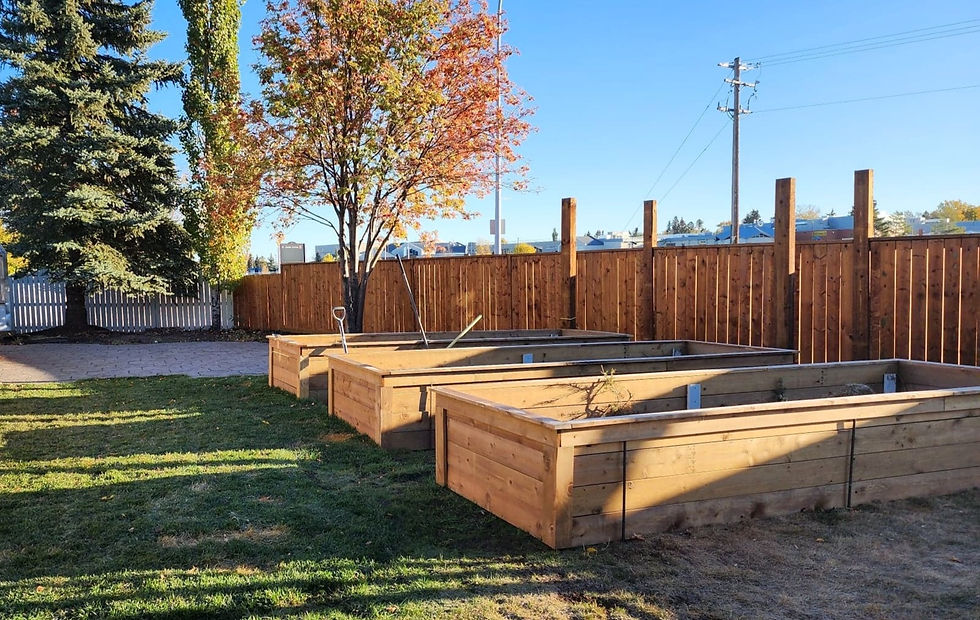
January is all about planning, dreaming, and ordering. I make lists and ideas in my journal, add to them or make changes, right up until planting time. We made plans, followed through on them, added some more, and then ran out of time to finish the job. This is good, it leaves me more time to ponder.

The bones of this new yard are amazing, the former owners were avid gardeners but not food growers so we had to do some tweaking to make room for greenhouse, gardens, raised beds, and fruit trees.
If you are in planning mode, have recently moved to a new house and yard, or are making changes to your landscape, here are a few tips that will help.

Planning is key! Live with your landscape for a little bit. As you sit outside sipping your morning coffee and evening wine, watch where the sun is in the yard and for how many hours.
We moved into this house in mid-July so spent a lot of time sitting on the back deck and just watching. I noticed that the north corner of the house, back by the big spruce tree, got a lot more sun than I thought it did. The sun was there from late morning all the way till 5-ish, and then got several hours of evening sun as the sun rounded the house to set in the west. Lots more sun than I thought, at least 8 hours. Perfect spot to stick a wee greenhouse!
Jot down notes and observations in your journal, start drawing up plans on what to put where. How to plan your new yard, potager, and landscape?

I just recently read that you can Google Earth your yard and screenshot it, making it super easy to put your plans directly into your yard. This shot of my house was taken prior to the changes we made so is not usable for my future planning (drat!) so I did not bother to blow it up for my planning.
Draw out your yard on a piece of paper. Add any existing structures to the drawing if they are staying in the landscape. Then start adding the elements to it.
Mark out north and south on your drawing so you know where to put trees, structures, etc.. so that they do not shade your beds.
1. Figure out your big hardscaping items first. Are you putting in a shed? Gazebo? Pergola? Trampoline? Firepit? Patio? Swing set? She shed? Pond? Greenhouse? Arbour? Need a pathway that takes you from house to garage, or to the shed, etc? Place all of the large items and hardscaping on your drawing first as they are hard to fit in later.
2. Where is the best place for your garden beds/plot to go? You want 6 to 8 hours for a happy, thriving food garden. It does not all have to be at the same time, in one stretch. Maybe you have a north facing yard where you get 4 hours in the morning and another 3 or 4 hours in the evening as the sun sets in the west.
3. Plan where your trees will go. Keep in mind where they will cast shade in summer (so as not to shade your new beds) and remember to check how large the tree will be at maturity before you plant. Most fruit trees come in semi-dwarf, which can still be a fairly large tree in a small yard at 12 to 15 feet tall and wide, but some also come in micro-dwarf/mini-dwarf. For both ornamental and edible types, I go with small trees or large shrubs.
4. Next, add your shrubs to your plan. Maybe you want to add some climbers to the arbour or rose bushes in amongst your fruiting shrubs to attract the bees and pollinators. Add those to the drawing, even if you are not sure exactly what you will plant, plan for them, give them a spot, and decide how large it can be.
5. Then come your perennial flowers, fruits, and veggies that will be there for the next 5 to 20 years. Things like asparagus, horseradish, rhubarb, strawberries. It takes asparagus 3 years (from roots) and 5 years from seed to start providing you with spears so you want them in asap.
6. Last thing to go in is your annual flowers and veggies. As long as you have the beds planned for them, you can plant them up annually any which way you want. How to plan your potager with annual flowers and vegetables coming up in another post.
What are our plans here and how are we going about making the changes?

1. Following those tips listed above. We started by planning out the hardscape, the buildings, pathways, and patio.
We decided where the fancy she-shed will go and how to make a bigger, more suitable patio for the dining and entertaining we want to do. The wee greenhouse, the arbours, and pathways. You can see the changes we made last year HERE!

2. We then put in garden areas along the fence line and big, long raised beds on one half of the long yard, leaving a good stretch of yard for the dogs to play, roll, and run. Make a plan that suits your lifestyle.

*** Plan for how large the plants will be at maturity! Tree size matters a whole lot!
3. When you begin buying and planting, fruit trees and shrubs take the longest to establish, so plant them first. Most all fruit trees start to produce at about 5 years of age, so if you buy a 2 year whip, you get reliable fruiting in 3 or 4 years. Shrubs reach maturity 3 to 5 years after planting.
I always tell people at my workshops that fruiting trees and shrubs are just as pretty as ornamental one, and they give you food. Have room for a small tree in your yard? Pop in an apple tree, pear, cherry, Asian pear, peach. Depending on where you are, your gardening zone, plus your micro-climates in your yard, you can grow all sorts of fruits.
Instead of spiraeas, pop in a blueberry, saskatoon, honeyberry, blackberry, raspberries, jostaberries, gooseberries... Mix your ornamental plants with your edibles for an attractive looking yard that feeds you, feeds the pollinators, and keeps the neighbours happy, too.
We have all sorts of established ornamental trees and shrubs in the yard so have decided to put in an 'orchard' along the south fence line. Really, it is just a row of fruiting trees running along the fence in our most protected area of the yard, but I am calling it my orchard ; )
The orchard will consist of one or two hardy apple trees that are dwarf or micro dwarf and have good storage, considering Gala, Norkent, or Goodland. Maybe an espaliered apple, too, as they take up little space.

4. Fruiting Shrubs...
a) We have a really lovely, big berried Saskatoon that we just love. The berries are huge and sweet. The dogs loved them!
We had to move it last year, with the new fence, right in the middle of the hot, dry summer. It looked like heck for the rest of the year, the leaves all shrivelled up but the stems were pliable, so we are hopeful that it has made it. Will see what happens in spring. If it does not make it, we will most definitely put in another one, probably a Thiessen. We may just put in another one anyway, just because they thrive here and are yummy.
b) Blueberries- are more of a novelty here but we are going to try a couple in a sheltered spot that will fit two of them. We will be going with the Chippewa for it's great, big berries, and then either a St Cloud, Brunswick, or Northblue. Worth trying though keeping the ground acidic enough for them to thrive and fruit is the hardest part here on the prairies. Blueberries are self-fertile but produce better with friends so we always go with at least two different varieties.
c) Grapes - We have a blue one already, likely a Beta (great for jelly), but want to try the Somerset, as well. We think we have the perfect spot for it, so is worth a go!
d) Raspberries- are a must! We have three plants right now and are not sure if we will plant a couple more of just wait for them to spread, as they tend to do. Raspberry jam is my absolute favourite! We are right smack dab in the middle of the province so we occasionally get chinooks but not as often as Calgary does. Chinooks can wreak havoc on your early flowering fruits, like pears, apples, and raspberries. If you are north of here, you can grow the summer-bearing raspberries (floricanes) but if you are south of here, you should go with the ever-bearing types (primocanes) so I think I will try some of both and see what happens. Here is a list of cold hardy raspberries. If you are one of my followers from the island, zone 7, I would plant both types!
If you like Haskaps/Honeyberries, you might plant those instead of blueberries on the prairies, as they are much hardier. I have grown them before, when we lived northeast of Edmonton and found that they require too much water in order to stay tasty. They were so bitter that the birds would not eat them! As I am very thrifty with watering, I won't be planting these in my yard.
I have heard from other growers and bloggers that some varieties taste good, but some are very, very yucky, regardless of how much water one gives them. If you want to give them a go, you may need to trial a few kinds but pull them out if they are yucky, put in a different kind! Truly! Life is too short for yucky berries. You will need two varieties as they are not self-fertile but I think they are sold as sets at most all nurseries.
5. Perennials Fruits and Flowers.
Strawberries - While I am not a big fan, hubby and the grandbabies love strawberries so therefore they are a must have. If you want to grow them mainly for making jam and for freezing, get June-bearing strawberries. They make the really big berries that you see at the shops, they also fruit in a 2 to 3 week season, so you get lots of berries all at one time, making it easy to jam them up. The ever-bearing or day neutrals are nice to have in the yard for snacking.
Rhubarb - very hardy, grows everywhere, we already have a nice, big one here on the property that is thriving by the hose bib. A must have in every garden : )

We have tons of lovely ornamental shrubs and perennial flowers here on the property already, so will sit with it a while and see how things grow. We know that a side yard revamp is in the works, add a few roses and blue and white perennials, but that is all I know so far.
The rest of the ideas for planting are still brewing in my head and journal.
I hope this helps get you started with your landscaping plans. If you are stuck, I highly recommend you hire a landscape designer to help you put your thoughts and ideas on paper. They are able to give you ideas that might not have even occurred to you, help you pull it all together. You might just get a basic drawing, or you might prefer a detailed 3 to 5 year plan, or you may want them to do the planning and the work. All are great ideas to get you to where you want to be.
Happy Garden Planning ~ Tanja


Comments