


Five Growing Tips For A Bigger, Better Tomato Harvest!
- Aug 2, 2024
- 11 min read
How to increase your tomato harvest, and deal with frustrating tomato problems.
Some tomato/garden problems are due to soil issues. Maybe you have purchased a new to you home with tired soil in the garden beds, soil that has not been fed with organic matter. Maybe you have gardens that are not thriving with soil life, beds that have been fed with chemical fertilisers only so the soil is lifeless. Don't be too hard on the former gardener, it was the era, the commercials led people to believe that using a fertiliser is all you needed to do to have thriving gardens.
Maybe you have purchased new soil for your raised beds that is just okay, but not yet amazing. It tends to take a few years to build up good soil. It also depends on where you are living, different areas of the country have different soils.
Some tomato problems are caused, or made worse, by the weather. Very wet, cool, or hot weather. Maybe you have great soil but you had a really cool spring, a heatwave, a heat dome, or maybe all three!
Here are five growing tips to help your tomatoes overcome these weather related problems for a bigger, better harvest.

Tip 1 - What to do when you have few flowers, but happy looking foliage.
Healthy green growth means that you have a healthy amount of nitrogen in your soil keeping your foliage green, lush, thriving, and your vines growing. Nitrogen is the first number listed on any fertiliser package (N-P-K).
If you want more flowers, Do Not feed with a high nitrogen fertiliser.
What you want to look for is a liquid, or water soluble high phosphorous fertiliser. That is the middle number (N-P-K). It does not matter whether it's being sold as a flower fertiliser, or vegetable food. The middle number promotes both more flowers and stronger roots. A higher phosphorous fertiliser will help both vegetables and flowers make more blooms.
In summer - Take quick action. If you do not have much for flowers by the time summer rolls in, you want to use a liquid or water soluble plant food so that it gets to the root system quickly. Fast enough to make a difference right away. Mix as directed on the package and apply once a week for two weeks in a row. You should start seeing more blooms starting during that 2 week period.
When fertilising plants, always water them first, to prevent burning the roots. I like to water in the morning and then feed them a few hours later, in late afternoon.
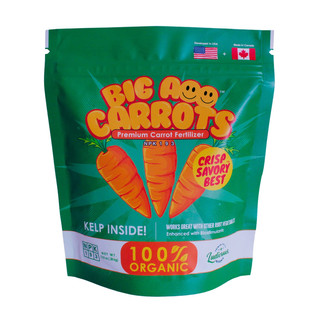
Here are a few different high phosphorous fertiliser ideas that you can use for fast results. They are mixed with water and fed to the roots. Shop for these products (or a product with similar N-P-K numbers) either on-line and have it come right to your doorstep, or pick up from your favourite local box store, greenhouse, or nursery.




In Autumn - If you find that you regularly have less blooms on your tomatoes, veggies, and flowers than you would like, or you tend to not have great luck growing beets, carrots, parsnips, root crops of any kind, you may have a phosphorous deficiency in your garden.
Boost the phosphorous for next year by applying one of these products to the garden in autumn, after your garden clean up. This will give it time to amend the soil so it is ready for planting in spring. Alternately, you can apply it in early spring, a few weeks before planting time. Lightly scratch it into the surface with a rake or cultivator.
Broadcast scatter it over your beds, or add in with compost or manure and spread over the bed. If you are organic gardening, you are feeding your soil with a layer of compost/manure in the fall anyway (see Charles Dowding). Mix the phosphorous product in with the compost and rake out over top of your beds. This is beneficial for perennial flower beds, rose beds, and food beds.
Here are a few ideas for a 'slow release' phosphorous to improve your soil in either spring or fall. If you prefer a vegan source, stick with the rock or mineral phosphates. If purchasing bone meal, try to get the powdered kind rather than granulated, it will break down faster.



Gaia Green is easy to pick up just about anywhere in Canada, being a Canadian organic garden product.
Disclaimer. As an Amazon affiliate, if you were to purchase an item(s) from any of the affiliate links, I get a wee small amount of money to support my blog. It does not cost you any extra to purchase through my link than if you went to that item through your own search. Many thanks for your support.

Tip 2 - You have healthy plants, lots of blooms, but little to no tomatoes forming.
Tomatoes are self fertile and rarely need help to set fruit. The wind, or the fluttering wings of bees and pollinators, move the pollen about so that pollination occurs.
Weather can make a big difference in proper pollination and fruit formation. Cool, wet, rainy, humid, or even very windy weather prevents pollination from occurring, and sometimes flowers do not get pollinated at all. Poor or improper pollination usually occurs in early spring, while the weather is unstable. This disruption in pollination sometimes results in weirdly shaped tomatoes (mostly beefsteaks) that are lumpy, bumpy, or fused together. Still edible, but very weird looking.
High temperatures can also wreak havoc with pollination, especially if night time temperatures remain high. This can make flowers sterile, or delay fruit set. If the flowers have shrivelled and are dry, with no fruits at the end, those flowers are done for. They will not make tomatoes. Not to worry though, the plant continues to make fresh, new blossoms, or some will be hiding in the shade of the foliage, they will be fine... with a little bit of help.
This is the problem I was having this year. Before I left for my one week holiday, the weather was super windy and very cool. It switched to a heatwave the very day I left. I came home to healthy, lush, thriving tomato plants, absolutely covered in blossoms, but very little fruit was actually setting.
First of all, you want to hand pollinate/help the pollen move about. Take the tomato cages, or strings, and give the plants a good shake. This is often enough to get the pollen moving. I do it daily for a few days in a row. Another thing you can do is take an electric toothbrush, set it against the stem of the flower cluster, or the plant itself. This will shake the the pollen about, helping to set the fruit. Do these things in the morning, or evening, during a heatwave, not during the heat of the day. If temps are low, or weather is humid, do it during the warmest, driest time of day.

Secondly, feed your tomatoes with a high potash fertiliser. That is the last number on the packaging (N-P-K).
As soon as I came home (3 weeks ago), I gave my tomatoes a good shake and then gave my tomatoes (and dahlias) a good shot of this liquid seaweed extract . I now have loads of good sized tomatoes on all the tomato plants.
The extract is 2-2-16, all natural, and is the bomb. I have had that small container for several years now. The extract is mixed with water, and then that mixture is mixed with water again, so one small container makes 1200 litres of fertiliser! Reindeer is a small mom and pop Vancouver Island company, but Stuart ships anywhere in Canada. This extract and his liquid seaweed are two of my most favourite things. If you are going to order and pay for shipping anyway, get both! You will love them. This is just my personal opinion/review, not a paid for advertisement.
Just one application is probably enough to get things going, but you might want to give them a shot once a week for two weeks in a row. That is it. You do not want to overdo it. Over fertilising may cause further problems, like sterilisation, that you will not be able to rectify.
Here are some other fertiliser ideas that are high in potassium.


The bagged one (Lawnderlust) in the middle is also an extract, very similar to the one I purchase from Reindeer. It is pricy to start with, but you mix it with water and it makes up to 2000 litres of fertiliser. You will have it for years! You can use it on anything that is struggling, even indoor plants that are not flowering.

Tip 3 - Your Tomato has yellowing foliage, brown tips, few flowers or fruits, looks peaky, not healthy.
This can be so many things. Might be that it was too cold when the tomato was planted, temperature fluctuations, over or underwatering, bugs, too small a container, or lack of nutrients.
If you think it is a too small container (should be 5 gallon, or bigger), pot it into a larger pot, or a big bucket with holes drilled into it. Use a bagged potting soil, not garden soil, and add some compost or manure. My 'secret' ratio is 2 parts compost to 5 parts potting soil. The larger pot with good soil should perk it right up.
You cannot change the temps from when you planted, but you can help your tomatoes deal with the fall out with nutrients. Though you might think it is a lack of nitrogen (first number) because it is so limey in colour, it actually needs a boost of potassium (potash). The last number again (N-P-K). A nitrogen deficiency can look similar on the foliage, but if the entire tomato looks a bit off, you need potassium. Also, if you feed your soil annually with compost/manure, it is unlikely to be a nitrogen issue.
Potassium is considered the all round, make it healthy fertiliser. It helps the water and nutrients flow through the plant, it makes plants stronger, which in turn means less pest and disease problems. Helps your plants deal with heat stress and drought.
As above, this is something that you only want to apply once, maybe twice in midsummer. No more than that. If you still need something afterwards, choose an all purpose fertiliser, like this water soluble 20-20-20.

Tip 4 - Tomatoes look great, but are not ripening.
Now that we are in August, if your tomatoes are not ripening, they might need some help to prod them along. Where you live and when your first average frost is, will make a difference in when you start to worry.
Here in Central Alberta, our first frost is the first or second week in September, on average, so we need to get a wiggle on pretty soon. On the coast, it is not till October, but you have the September rains and late blight to worry about.
First - Remove much of the excess foliage. I have removed foliage 3 times already (see above) as I have such lush tomato plants. Start from the bottom, and prune off excess foliage. This puts the energy into the ripening process, rather than making new leaves.

Never was that a problem for me on the island, hahaha. Usually the plant was kinda pathetic, while the fruits were amazing (see above). It is a soil thing. If you have gardened in the rocky, sandy west coast soils, you know what I mean. Here on the prairies, we have clay soils that tend to hold more nutrients and moisture, so prune, prune, prune.
Oh, but don't get too carried away. Do not remove all the foliage so that your tomatoes end up with sunburn.
Second - Top your indeterminates. Take the tops off of your vining tomatoes to stop it from growing taller and putting on more flowers. This will direct the energy into ripening the existing fruits. You can also top your determinates (bush type tomatoes) if you really want to push things along.
Third - Remove new flowers. They will not have time to grow and ripen.
Fourth - Cut back on watering. Tomatoes love water, they will keep on fruiting and growing as long as you are watering. This is not what you want if you are trying to ripen the existing fruits. Time for me to start cutting back on water. I've been watering every 3rd day this summer but will now taper off to just every 5 to 7 days.
How often you water will depend on whether the tomatoes are in containers, in ground gardens, raised beds, depth of raised beds, temps, and how often you get a good rain.
Always check with your finger to see if the soil is going dry before watering. Overwatering will often give you blossom end rot (BER), and bland tasting tomatoes with no flavour.
General Guideline for regular summertime watering...
Potted tomatoes - every 2nd day.
In ground gardens - every 3rd day.
Low raised beds - twice a week.
Taller raised beds - once or twice a week.
Fifth - As we near mid to end month, remove any tomatoes that are too small to size up and ripen before first frost.
Sixth - This is something I am loathe to do as I like the depth of flavour in vine ripened tomatoes. Will only do it if I am truly running out of time. Remove blushing tomatoes. Let your tomatoes get to the blushing stage and then bring them in to finish ripening indoors, leaving the rest of the tomatoes to blush, or ripen, on the vines.
Greenhouses and frost blankets will extend your season by several weeks, sometimes by as much as a month.

Tip 5 - Keep them healthy.
Each year will have it's own challenges, with some years being better tomato years than others. The weather will sometimes be too hot, too cold, too wet, too humid, too something. While you cannot control the elements, you can ensure a good harvest by keeping your tomatoes as healthy as possible.

Potted tomatoes - See tip 3 for how to plant, adding manure or compost in with the potting soil.
Feed with an all purpose tomato or vegetable fertiliser a couple times a month. This is the easiest way to keep them thriving. Epsom salt, a couple tablespoons (a small handful), on top of the soil, once a month, is also helpful to keep the leaves green and the plant strong.
Tomatoes in the Garden (raised bed or in ground) - First and foremost, the most important part about organic gardening is feeding the soil to feed the plants.
At the end of the year, after garden clean up, layer 1.5 to 3 inches of compost or manure on your garden beds. Rake it out, leave it sit for the winter. If you have great soil, less is required. If your soil is lacking, layer it on a bit thicker. Can also be done in spring, a few weeks before planting time. I like to use different compost or manure as the more soil life diversity you have, the better your gardens will perform. Ps, chicken manure is my go-to, my manure of choice.
If you feel like you would like to add more nutrients, planting time is the best time to do this. Add some organic granular, slow release, or pelleted fertiliser.
My favourite fertiliser to add to the planting hole, or to scatter around the plants is Acti-Sol. It is a pelleted, dry chicken manure, with calcium added to help with BER (blossom end rot). It also deters rodents from digging up your bulbs, so is great for fall bulbs, too).
Alfalfa pellets (yes, like you feed your bunnies or gerbils) are a great organic source of nutrients, especially nitrogen. You can also buy alfalfa meal. If you like to mulch your garden with straw, choose alfalfa straw, if it is an option. It costs a bit more but adds more nutrients as it breaks down.
Liquid seaweed/kelp as both a water in fertiliser and a foliar spray gives an instant boost. To apply a foliar spray, dilute kelp/seaweed in a spray bottle, or backpack sprayer, spray liberally on the foliage.
Water with an all purpose vegetable fertiliser now and then. Do not overdo it. Over fertilised tomatoes will stop fruiting, especially in a heatwave.
Side dress with manure or compost in mid summer and let the rain and hose bring the nutrients to the roots.


The most important thing for healthy, thriving tomatoes, is to feed your soil so that you have have healthy soil. Healthy soil means healthy plants, which means less pests and diseases.
These fertiliser tips will help your tomatoes overcome weather related issues that may have stalled out your tomatoes, will help you reap a bountiful harvest.

Happy Tomato Growing ~ Tanja


Great tips, thank you!