


How To Grow Great Big Onions - Part 2
- Jan 27, 2024
- 6 min read

I get asked this one a lot... How does one grow really great onions that size up well and taste great?

1 - Start with great soil!
The secret to great onions is to have really great soil to grow them in. Great soil is always the answer : )
You want to start with rich, fertile, well-draining soil, that is loose, friable, weed-free, to a depth of 6 inches. Ensure that you have great drainage as onions will rot if grown in wet beds. Raised beds are great for growing onions and root crops.
If you have great soil already, top dress with 1/2 to 1 inch of compost or manure. Lightly scratch in. Do not dig or turn. Onions do not have deep roots so no need to dig or turn the soil.
If your soil is 'tired', has not been fed with organic matter for years, add more compost or manure, a good 2 inches, if possible. You can also mix bonemeal and sulphate of potash in with the compost (yes, these are organic amendments), if you like. Lightly scratch in.
*Note- to scratch in means to spread compost on top of the bed, take a hoe and run it through the top inch of soil, mixing the old soil in with the compost.
We just started new raised garden beds last spring at this new house so filled our beds with fantastic compost, adding just a light layer of black earth on top. The onions grew like mad. If you are in the Red Deer area, check out Kamen Landscaping for terrific compost. We bought straight compost.
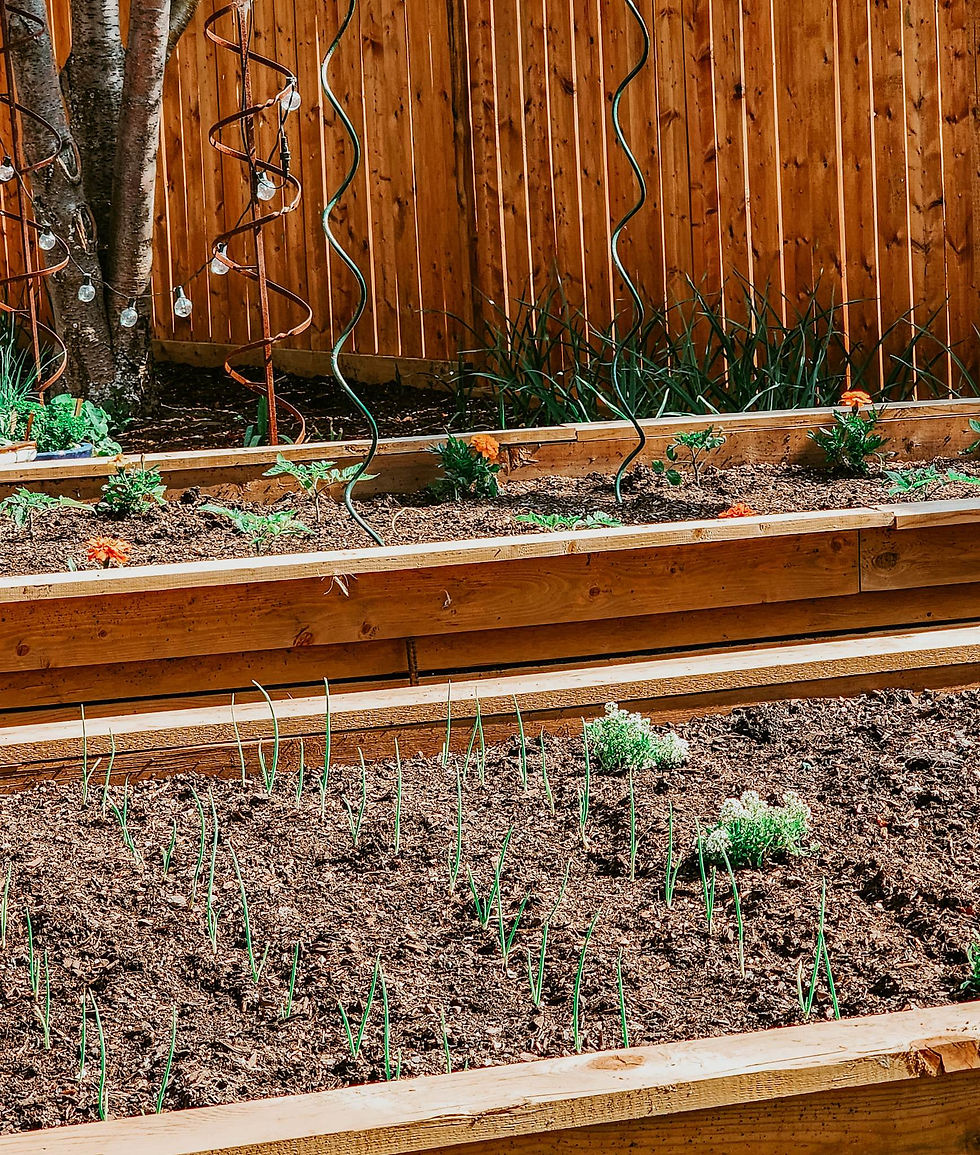
2 - Start your onions from seeds, seedlings, or sets
Seeds come in a huge variety, a wide array of colours and tastes. They are my preference, as I can choose exactly what I want to grow each year, plus try new ones, too. I find that onions from seed size up better than sets do.
Sets are readily available at most garden centres and even many box stores in spring. Generally available are multipliers (shallots), yellow, white and red. Though there is not a huge selection in varieties, they are super easy to plant up and care for, to get a decent crop of onions.
Seedlings/transplants, (see picture further down) though less readily available, are generally found at garden centres in late spring. Transplants are seedlings that have been grown on for several months from seed. They are the favourite of most gardeners. Simple to plant up in trenches and they grow better and bigger bulbs.
If you live in Canada or the northern states, you want to grow Long Season or Intermediate/Day Neutral varieties.
My favourite long season onions are...
Walla-Walla and Ailsa Craig are lovely, large, sweet onions. Sweet onions do not keep well, so you will want to eat them throughout the summer and within 3 months of harvest.
Early Yellow Globe, Yellow of Parma, Stuttgarter are great storage onions, last for many months.
Red Globe, Red Wethersfield - great keepers.

Starting from Seed
I grow my onions from seed as I love having choices, and being able to choose heirlooms.
-Start seeds in flats, trays or 6 packs in Late January or Early February.
-Use a soil-less potting mix with some compost added in. I like Pro-Mix.
-Sow the seeds, lightly cover with the compost mix to about 1/4 inch in depth, water in. --Place on bottom heat till you see shoots for faster germination, or simply place in a sunny spot and they will come up just fine.
-Keep soil moist.
-Feed now and then with liquid seaweed (spray tops for a foliar feed) or water in with either an organic all purpose or vegetable food.
-Each time the green tops grow to about 3 or 4 inches high, cut them back again to 1" tall. This encourages bigger, better bulbs.
*Note- Though most places say to plant when your seedlings are the size of a pencil, I have never had mine size up that much and yet they have always grown really well. Never have they failed, so plant them even if they are skinny!

Growing Onions from Sets
Onion sets are small onions, grown the season before and then put into dormancy. They are the easiest onions to plant and grow.
-Can be planted in the garden 4 to 6 weeks before last frost (late March in the Nanaimo area, a few weeks later here on the prairies) if your ground is dry and ready to go. Do not plant into wet, soggy soil.
-They will grow just fine and size up just fine if you do not get them planted till April or May. Ideally, plant so that they have time to make roots before the temps get warm.
-Discard any onion set that is mouldy or shrivelled up, as it will not grow.
-Push into loose and friable earth with the root end down, pointy end up. Place about one inch deep, just deep enough that the tip of the set is showing.
-Plant 4 inches apart, in rows that are 6 to 8 inches apart.

Planting Seedlings/Transplants
-Make a trench 3 inches deep.
-Place seedlings into the trench, 4 to 6 inches apart.
-Push the sides of the trench/furrow so that seedlings are sitting up straight.
-Cut tops to an inch high. This helps form a bigger and better bulb.
-When the tops start to grow again, you know that your onion is well rooted in and is in growing mode.
-Water in.

How to Care for the Onion Seedlings
-Water deeply once or twice a week for strong, sturdy root systems, even in hot dry spells.
-Do not be tempted to overwater onions, they like the hot weather, will rot or go soft if overwatered.
-Do not feed. If you have amended your soil and have great soil, you do not need to feed them during the growing period. You will get soft onions if you feed.
-If you really feel that they are lacking and not thriving, spray with liquid seaweed/kelp as a foliar feed every two weeks in June and maybe once in July. Then stop.

How & When to Harvest
You can harvest immature onions at any time, or size, during the summer for salads or cooking.
-To harvest for curing, stop watering when tops begin to fold over.
-When most of the onion tops have folded (80% or more), give the others a hand by pushing them down yourself so that they all finish at the same time.
-Leave in the ground for another week to 10 days to finish maturing.
-If you leave them in the garden for too long after the tops flop over, they will begin to rot and die as they are no longer growing, their job is done, they are maxed out.
-On a sunny day, pull the onions gently from the ground. They can be left on top of the garden bed for a day or two to start the curing process.
-Do not wash or spray down with water.

How to Cure Onions
-Brush the soil off of the onions. Do not remove tops or roots yet.
-Onions can now be braided and hung to dry in a shaded area, somewhere with good air flow and no direct sunlight... carport, porch, open sided shed....
-They can be also be laid out on tables to dry. I have antique bulb trays that I lay them on, stack the trays, and leave them to dry for several weeks. I rotate the trays now and again.
-You can also simply lay cardboard or newspaper on the carport floor and spread the onions on top to cure.
-Leave to dry completely for three weeks. If they are not completely dry, they will rot in storage. When dry, they will feel light, skins will be papery and dry.
-Clean up onions by removing the roots and tops.
How to Store Onions
Once cure, place into mesh bags, crates, baskets, trays, and store in a cool, well-ventilated area.
Or, hang the cured braided bunches.
Check occasionally for rot or sprouting.
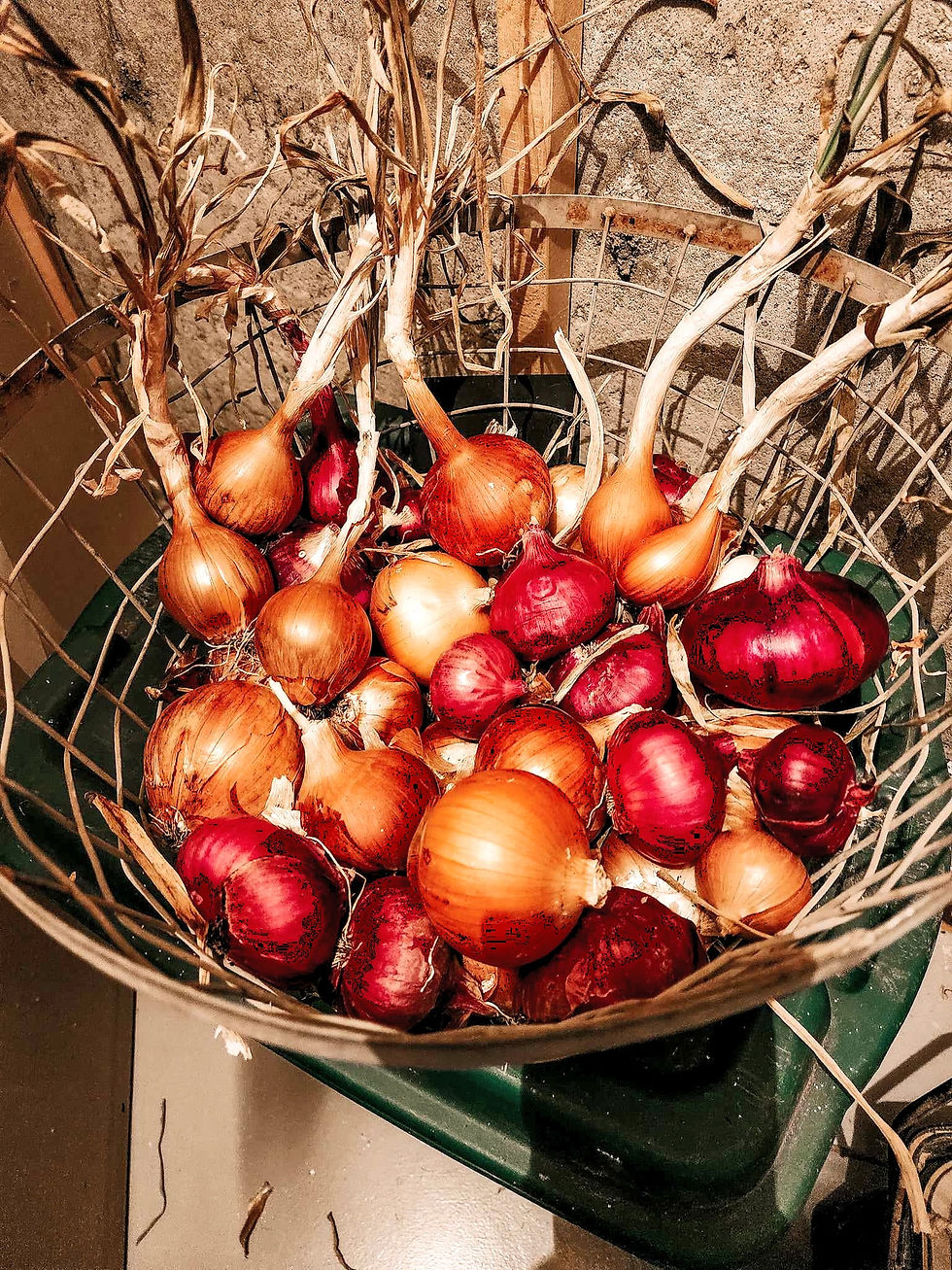
These are my onions in the store room at the end of January, so about 5 months later. They look and feel great, not a bad one in the bunch. The ones with tops on them were put into storage with their tops on as they were still green. I was not sure how they would fare but they look just as good as the others do.
*Note: Any onions with bull necks (thick, fat necks) will not cure properly and thus are not suitable for storage. Take these ones into the kitchen with you, clean them up and use them up first. They will store in your fridge or pantry for a week or two. Can also be chopped and thrown into the freezer for soups or stews.
This is part 2 of how to grow great onions. See here for Part 1 - Four Simple Methods To Start Onions From Seeds.

Onions have few pests or problems. The onion maggot is their biggest threat. The best (only) way to prevent maggots from getting at your onions is to cover them with a tight bug mesh after you plant them. This keeps the fly from laying her eggs on your onions. Buy one that is large enough and wide enough that you can pin in down (as in my pic) rather than just laying it on top and hoping for the best ; ) Here is one more that is a good size.
*Disclaimer. As an Amazon affiliate, if you were to purchase an item(s) from the links, I get a wee small amount of money to support my blog. It does not cost you any extra to purchase through my link than if you went to that item on your own. Thank you!

You can do this! They are easy. Just don't water or fuss over them, basically ignore them, and they will be great.


Comments