


Building & Filling the New Raised Beds
- Nov 9, 2022
- 5 min read
Updated: Mar 14, 2024
Thanks to the long lovely warm fall we had, we were able to get the raised beds built and mostly filled up.
These new raised beds are so beautiful, and so big! Both deep and long, that kind of big! Hubby built these lovely thigh high beds (my thighs, anyway, as I am super tiny), so I'd have less bending and no more crawling about on my knees.

The beds are 4 feet wide, 12 feet long, and 2 feet deep. They have been trimmed out nicely on top for a finished look. We have room for more, if we find that we have the need, but are now set for a season of good food growing in 2023.

To grow great veggies of any kind, your raised beds do not have to be very deep. A depth of 10 to 12 inches of good garden soil is perfect. Whether that means just one board high, so the veggies grow into the ground beneath them, or if you are on rock or hardpan, build it 2 boards (2"x6") high. This will grow everything nicely, from root crops to tomatoes and everything in between.
*Note - if you are on hardpan, you want to have that 10 to 12 inches. This bed above was originally only one board high. As it was going to be for growing strawberries and they have shallow root systems, I thought 6 inches would be enough. However, it was too hot and dried out much too fast being so shallow, nothing would thrive. So, we built it up again and everything did fine after that. If you have soil underneath, you will be fine with just 6 inches, but if you are on a rock, you need to go higher.

I am pretty excited about these new deep beds, am going to try to grow really long imperator type carrots. Imperators are long skinny carrots, the ones that they generally sell in grocery stores.
I have grown nice imperators before (see them above) but am going to try to grow real whoppers in these deep ones. The ones in the picture are called 'Atomic Red' and are always on my must grow list, such great tasting carrots but I'm also tempted to try the Manpukuji carrots from Baker Creek, that can grow to 2 feet long! You know how I love to try new things and carrots are a family favourite.

To make these beds, we screwed the ends of the boards together to make a big rectangle. We built 4 rectangles and stacked them one on top of the other.
We then braced them together with scrap wood we had from an earlier demo. This will keep the boards from shifting, was easy to do and cost nothing.

The edges and tops were then trimmed with 1"x4"'s to make them pretty. Not a necessary step unless you want yours to look more finished. These are my very first trimmed out, pretty beds ever.
Hubby also put rebar on the outsides to keep the boards from bowing out from the weight of the soil. You can use wood to do this if you do not like the look, or you can do it from inside, but I really love the look of rusty metal! Will match my rusty spiral plant supports.
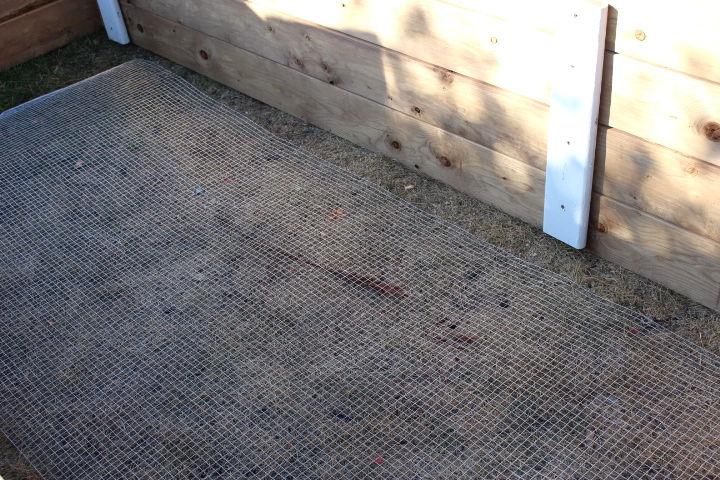
I heard that in some parts of town, folks are having issues with moles in their garden beds, so we put down some of this hardware cloth, a very sturdy metal mesh that they cannot dig through.... just in case. It cost us $25 per bed. Well worth it.

We then topped that with cardboard to keep out any grasses or weeds. They should not come through a 2-foot-high bed but because we are not filling the beds to the brim till spring, this is a precaution. Besides, we have lots of boxes from the move.

To completely fill these beds with compost and garden soil from a supplier would be costly, but is certainly an option. One that we have used in the past. However, the only 'good' garden soil or compost that I have found in the area thus far is very heavy and clumpy. We want these beds full of organic matter, soil life, earthworms, all sorts of good stuff to break up the soil for the best tasting and healthiest veggies.
Good soil is key to successful gardening, you want the very best soil that you can get so that the veggies are healthy. Healthy plants are less prone to bugs or diseases, plus taste so much better.
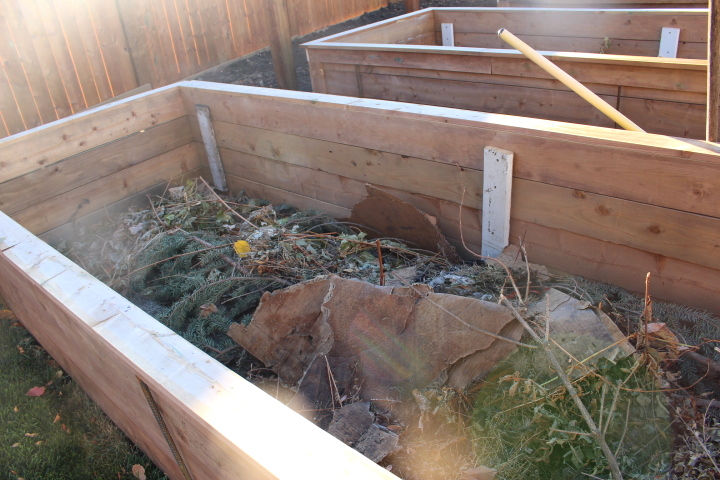
We tossed in all the tree trimmings, leaves, branches, cardboard, packing paper... anything organic that we could scrounge together from the yard and house.
If you can, the ideal way to fill these beds would be to put in logs and bigger pieces of hardwood for the bottom layer first, and then top with the branches and twigs, organic trimmings, leaves and such.

For additional organic matter, we got some straw from Farmer Jason, put a bale in each raised bed and added a bag of Pro-Mix potting soil, too. All this organic matter will attract soil life to the beds to break down the clippings and trimmings... which is exactly what we want for healthy soil.

This is how they look right now and may stay like this till spring unless I find a good manure or compost supplier this fall. Moving to a new place is hard as you need to find all new contacts! (Turns out we had a foot of snow two days after this so no time for the soil after all).
This will all start to break down over the winter, bringing in all sorts of lovely soil life, and we will be topping it in spring with that 'good' garden soil you saw in my garlic post earlier this month. As it is such heavy soil, we will be mixing it with bales of Promix and as much compost or manure as we can find.
If you have the funds and the time, bite the bullet and do it all this year. We are still looking for contacts and the best places to get everything here, plus are pretty much pooped out. It has been a really long summer; we are more than ready to rest our bodies and minds so that we are fresh and ready to tackle it again in spring.

That is how we built our raised beds.
Here is a link from another blog about how to make similar beds but with metal sides instead of wood. I am not sure how I feel about the tin on the sides... will they rust up? Will they heat up and thus dry out the soil faster? They look good though, we had considered them, here is an in-depth how-to on making them.

So, here we are... beds are half full of organic matter and winter on our doorstep. Time to rest up and plan my spring plantings.


Comments