


The Top Five Vegetables To Grow In A Drought Year
- May 13, 2024
- 5 min read
There has been a lot of talk about this summer being a drought year. So far, things are looking pretty dry here on the prairies. Of course, we never know what mother nature is going to throw at us, but is prudent to take heed and plan for water restrictions while still in the garden planning stage.
These top 5 veggies will give you a great harvest and do not require much water or time to care for. Easy to grow.

1st is Onions (also Garlic)
They like the hot and dry weather, only need a good water once a week to bulb up really nicely.
Water them twice a week when you first plant them, to get them established, but in the heat of summer watering just once every 5 to 7 days is plenty.
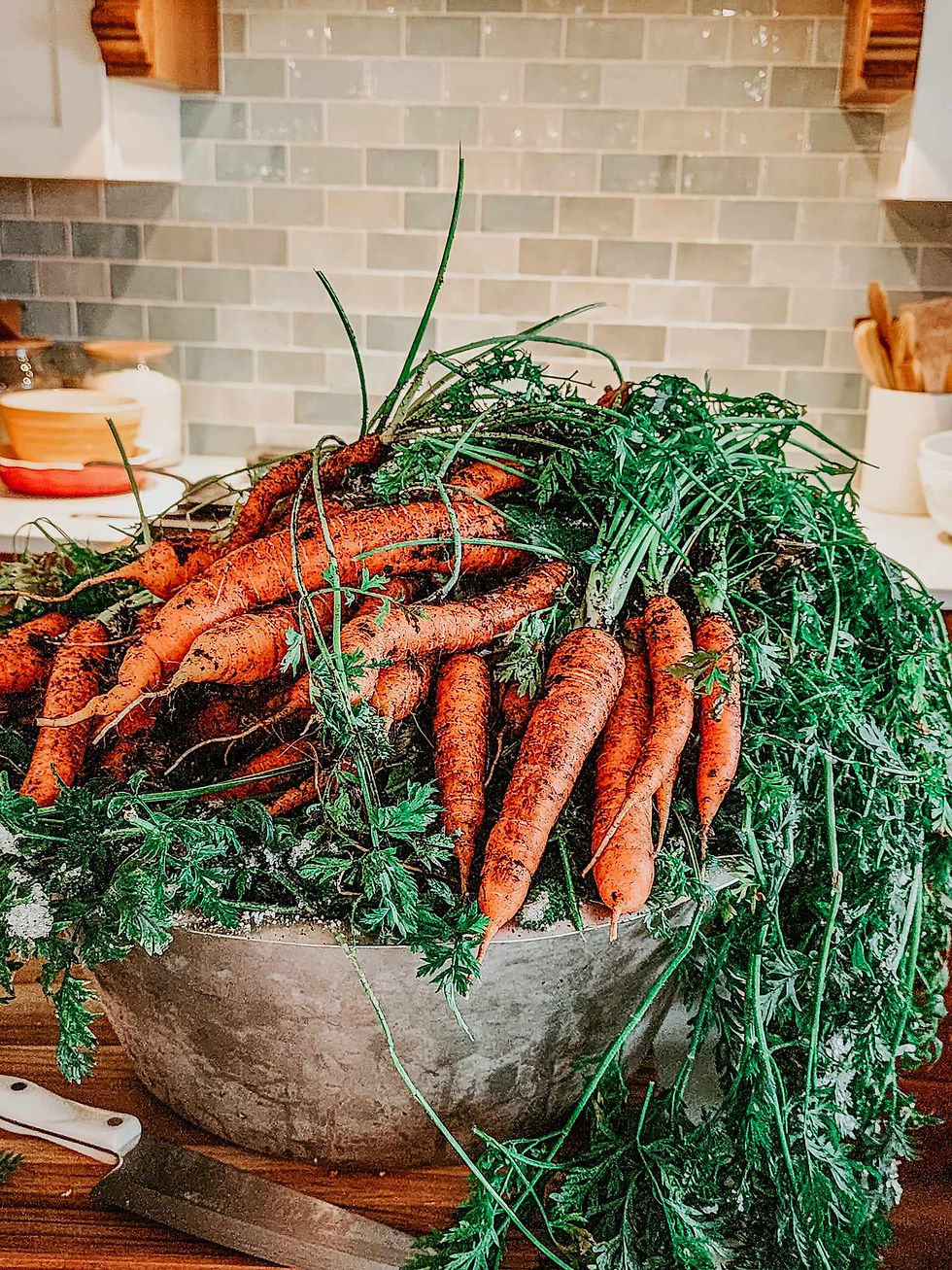
2nd is Carrots
Carrots have a long tap root that goes after the water deep in the ground so only requires water once every 5 to 7 days, as well.
When sowing the seeds, you need to keep the soil moist till they germinate. I like to cover mine with a burlap sack or doubled up burlap to help keep the soil moist till I see green.
Make the sowing trench, water the trench, sow the seeds, cover them up with 1/4 to 1/2 inch of soil, water again. Cover with burlap, soak the burlap, water through the burlap daily until you have germination. Peek under the burlap each day to see when you have small greens poking up, remove the burlap. This can take anywhere from 5 days to 3 weeks. Seriously!
After germination, water twice a week for a few weeks till all the carrots have all germinated and are coming up nicely, then cut back to watering less often.

3rd is Beets
Another root crop that is extremely adaptable to the conditions is beets. Most varieties are ready to harvest in 55 to 60 days so you can grow 2 to 3 crops a year, depending on how long your growing season is. I grow only one big batch per year, sowing in May and harvesting in August. The family loves beets so we boil or roast them on the regular, plus make pickled beets, too.
I guess I should clarify that I grow two different patches but both are sown at the same time. We usually grow the long Cylindra beets for pickling and the round ones for cooking/eating.
Soaking the seeds overnight will give you faster germination. Sow the seeds 1/2 inch deep in trenches, 2 inches apart, and water in. Keep them moist till you see germination happening. Beet seeds actually have 2 to 4 beets per seed, so you will be thinning them out as they grow to 4 to 6 inches apart. Water well every 5 to 7 days.

4th is Peppers!
This one may come as a surprise to you, as many people like to water them daily. Peppers actually thrive with less water, especially the spicy ones like jalapenos. They will also taste better, have more heat and flavour when watered less often.
I have had the best luck growing my peppers in pots rather than in the garden. I use 3 gallon pots and grow the peppers in the greenhouse, so they stay nice and toasty every day. These guys are fine with all the heat. Both hot and sweet peppers love hot and sunny.
Water very thoroughly once a week, giving them a really good deep soak each time. Peppers produce better in pots but pots require a good soak to wet the soil all the way through. Feed potted peppers with a liquid vegetable or tomato fertiliser once a month.
Disclaimer. As an affiliate, if you were to purchase an item(s) from the links, I will get a wee small amount of money to support my blog. It does not cost you any extra to purchase through my link than if you went to that item on your own. Many thanks for your support!

5th is Zucchini and all the other Squash (winter or summer)
Another surprising one. With all those big leaves and abundance of cropping, one would think they are thirsty plants. However, they really only need one or two good soaks a week.
Water twice a week to get them established and then once every 5 to 7 days is just fine. As they shade the soil so well with their large leaves, the soil does not dry out as fast.

Bonus drought tolerant vegetable ideas...
Both kale and chard require very little water, thrive in dry conditions, and look pretty in your potager garden, too.
Sow the seeds in early spring, 3 to 4 weeks before your last frost date, as they like cool temps. Sow a half inch deep 2 to 6 inches apart. Water daily till you see germination and then start tapering off to twice a week at first and then just once a week afterwards. Ideally not grown in the hottest part of your garden, they can handle a bit of shade. Thin seedlings to 6 -12 inches apart when they are 4 inches tall.
If you are starting from starts, buy when the seedlings are small (around 4 inches tall) so they transplant well. Larger ones tend to be rootbound in the 6-packs and often do not root out well. When it comes to transplanting, bigger is not better. Plant 6 to 12 inches apart, water twice a week to start, taper off when rooted in.
You can also grow other items if you are able to water twice a week. I deep water my tomatoes only twice a week, every 4th day.
Potatoes also only need water once a week, but should get a bit more when they are flowering, and just afterwards as that is when they are growing your spuds, sizing up.
Beans also only need water once a week.

When watering, use drip systems to minimize evaporation and water waste. If you are not able to set up the drip tubes, I like these flat weeping hoses. Not the round rubber ones, not sure how eco friendly those are, plus they tend to explode and water everywhere! Rather these flat ones with a woven outer cover.
I hook mine up once or twice a week, depending on the veggies in the bed, let it run for 15 to 20 minutes. Though the surface of the bed may look dry, if you stick your finger in, it is certainly wet soil to the bottom of the raised bed. If you are concerned about the dry topsoil, or along the sides where it dries fastest, go along with your watering wand and give them a quick soak.

It is possible to grow food in a drought year. Lots of food. Most vegetables require a lot less water than we think they do. Don't be afraid to push the limits and give things a try.
There is no harm in letting your plants go dry for a bit longer once they are established. Dry gardening is a thing! Your plants will actually grow deeper roots, require less water, be healthier, thrive and taste better when you water less often.
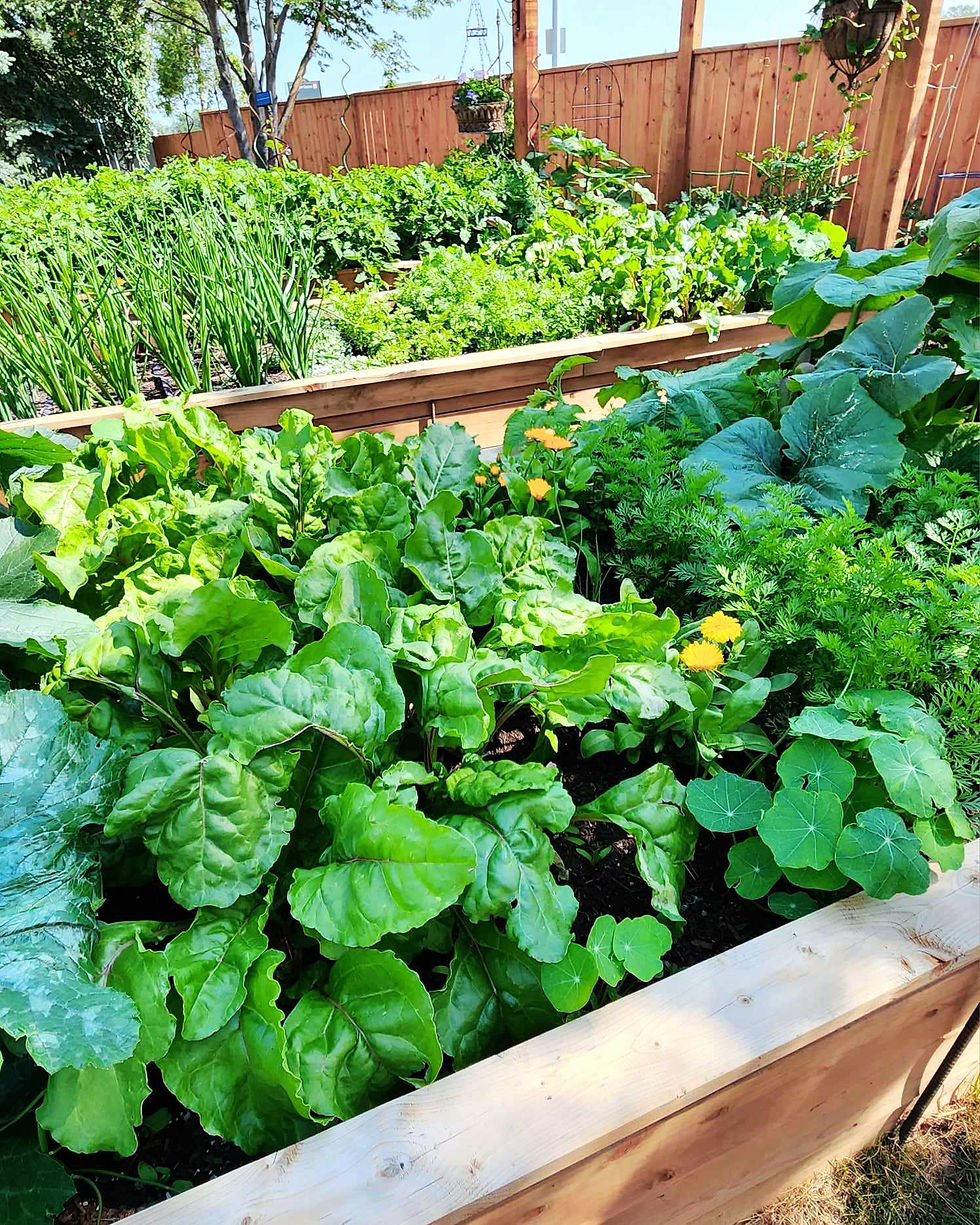
A secret tip? No bare soil. Plant or sow your veggies just a little bit closer together so that they create a thicket of foliage... no soil showing means less evaporation, slows down the drying out process.. and no weed seeds blowing in either.
Happy Gardening ~ Tanja


Comments