


Grow Herbs and Flowers From Cuttings
- Feb 7, 2023
- 4 min read

Growing new plants from cuttings is super simple and saves you bunches of money, too. Most all annual flowers for your baskets and planters can be started from cuttings, as can your shrubby herbs.
For flowers, think fuchsias, geraniums, lantana, sweet potato vines, verbena, coleus, bacopa, just about anything at all.
For herbs, woody ones like lavender, rosemary, thyme, marjoram, and oregano are super easy to start. Sweet Bay is also easy but takes a super long time to root out, but more on that below.
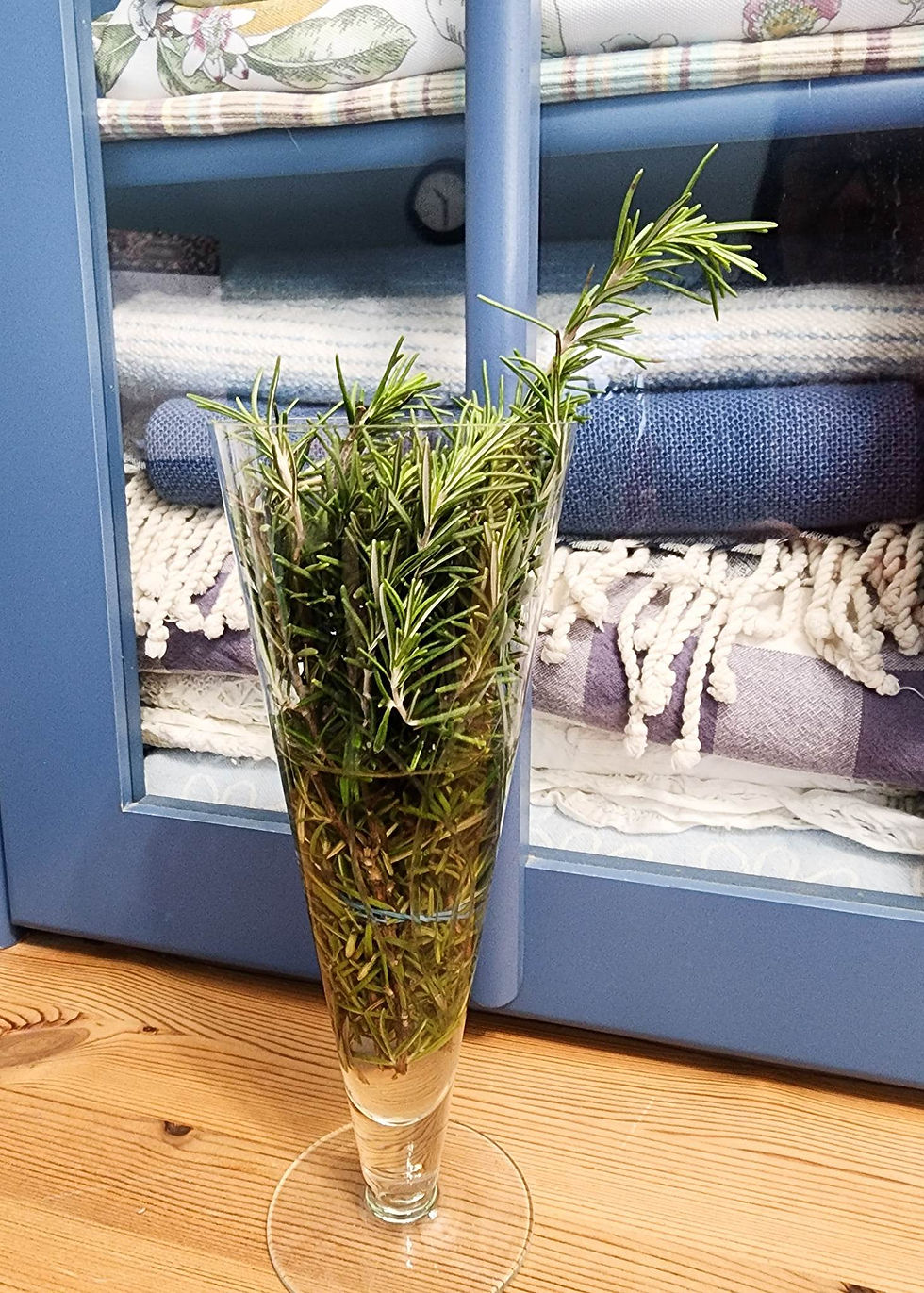
My garden is still frozen so I find the easiest way to start new herbs is to pick up the fresh herb packages at the grocers but if you live in warmer climes and have the plants, you can take cuttings from your existing plants.

Supplies required...
1. High porosity, good quality potting soil. I like Sunshine #4 or Promix HP.
2. A pot with drainage holes to put your cuttings into, 3 to 6 inches wide.
3. Pruners or scissors for harvesting your cuttings.
4. Exacto knife to trim the ends of the cuttings sharply.
5. A dibber, pencil, stick, something to make a hole in the potting soil to put your cutting in. I use that old green marker.
6. A label or piece of masking tape to put name on the pot.
7. Marker or paint marker to write on label.
8. #2 Rooting powder.

There are three types of rooting hormone
#1 for soft tissue cuttings (fuchsias, geraniums, etc..)
#2 for semi-woody cuttings ( rosemary, lavender, most houseplants, etc... )
#3 for hard-wood cuttings ( roses, grapes, shrubs, etc...)

You want your cuttings to be straight pieces with no branching, about 4 inches long. Carefully strip off all the bottom leaves/needles, leaving just a few at the top.

For cuttings with bigger leaves, like this geranium, take off all the side leaves, keeping just one or two at the very top.

1. Fill pot with potting mix, do not push it in but instead lightly tamp the soil in with the bottom of a drinking glass, your fingers, etc... You can use plastic or clay pots.
2. Water so that the soil is damp but not soggy.
3. Use pruners or scissors to take cuttings from the mother plant. You want to have a 4" to 6" stem if possible, however some plants are just smaller so, take the longest that you can. Cut just below a leaf node as that is where the roots will begin to grow from.
Do not use the older, woody stems, but instead take cuttings from the side shoots, the new growth, the branches, the tips... whichever part is green and pliable.

4. Remove all but the top two or three leaves. This is where you may need to use the exacto knife if the leaves are tough, like with a Sweet Bay Laurel.
Rosemary can just be stripped carefully with your fingers and the 'leaves' used for your cooking.
Geraniums and fuchsias, etc... you can just pinch the leaves off with your finger nails.
5. If the leaves are really big, you will want to cut them in half, like the Sweet Bay or Hydrangea ...
6. Cut the bottom of the stem onto an angle, this is where the exacto also comes in handy.

7. You may need to dip your stems into water in order to get the rooting hormone to stick. Then dip into the rooting hormone. To avoid contamination, I put some powder into a small dish, plate, cap or lid and dip it into that instead of the bottle.
8. Use your dibber to make a deep hole in the pot for the cutting. Put cutting into the hole to just below the topmost leaf node, about 1/2 of the cutting should be underground. For 6 inch cuttings, place them 2 to 3 inches into the pot. Push soil firmly around the stem.

Geranium cuttings... push them in all the way to that topmost leaf node.
9. Place as many cuttings into the pot as you want, as long as they are not touching each other.
10. Water them in.
10. Cover with clear plastic bag, then tie or band into place if it does not fit snug and tight to keep in the humidity.

11. Place into a bright location, though not in direct sunlight for 2 to 3 weeks. You will likely not need to water during that time at all, but if you see that your soil looks like it might be getting dry, remove the plastic, water, and replace cover. Bottom heat speeds up the process but is not necessary.
12 In two weeks time, begin to check your cuttings carefully for rooting. Gently pull upwards on the cutting. If you meet with good resistance, it has formed good roots, slight resistance, means it is well on it's way and needs about another week, and no resistance means no roots have yet formed so re-cover and leave for another week. Do not pull so hard that the cutting comes out of the pot, just check gently for resistance.
13. When they have formed good roots, you can remove the plastic and leave until you have time to pot them up. The gently use your dibber to loosen the soil around the new root system and lift the newly rooted cutting from the pot to be replanted into it's own pot.
Tips and Tricks
You do not want ever your cutting to dry out. The plastic bag helps to keep them moist a bit longer. Or, if using a plant tray on a heating mat, just use the humidity dome that comes with it.
Clay pots will dry out faster than plastic ones do so keep an eye on the plants, check them daily. Water the soil as needed to keep it moist.
Misting daily with a light spray will help keep moisture in the cuttings until they root.

The Sweet Bays (use #3 rooting powder) take much longer to root in but are now ready to go into their own pots.
The geraniums in the back have already been potted into their own 3 inch pots and are making lots of new growth. Ready to sell/plant up in a few more weeks.

You are now on your way to free new plants! This burgundy ivy type geranium is one of my all time favourites and not always available so I like to take cuttings of it to have many new ones for years to come.


Comments